

The top 5 things to consider when purchasing natural perfume
Shopping for natural perfumes can feel overwhelming if you're making the switch from conventional fragrances. You used to spend hours exploring every perfume in department store aisles, confident in the brands and scents you loved. But natural perfume is different territory entirely. Where do you even start? What matters most—ingredients, formulations, certifications, sustainability?
If you're ready to navigate this new world and ask the right questions, we've got you covered. Here are the five essential factors to consider when searching for the best essential oil perfumes, whether you're shopping online or in stores.
Understanding Fragrance Composition: What's Really Inside the Bottle
Most natural perfume brands highlight their top notes—the initial burst of scent you experience when you first spray. But understanding what's actually in the bottle goes much deeper than surface appeal. The fragrance concentration typically ranges from 2 to 30 percent, depending on whether you're buying cologne, eau de parfum, or perfume extract. Each has a different intensity and longevity.
Before making a purchase, investigate the fragrance ingredients thoroughly. Does it contain natural isolates or synthetic ingredients that mimic nature? Here's an important truth: just because a perfume is marketed as "natural" doesn't automatically mean it's chemical-free or breathable. There's no universal right or wrong answer—it depends entirely on your priorities. Are you seeking clean, green, sustainable, chemical-free, or alcohol-free options? Each choice comes with different benefits.
Reading labels is crucial to making informed decisions. Online, check the ingredients section carefully—reputable brands list everything. In stores, flip the box over and examine the fine print. If you see the word "fragrance" without a detailed ingredient list, that's a red flag. Brands that hide their formulations often claim they're protecting trade secrets, but transparency is the hallmark of truly clean and natural companies. They have nothing to hide and everything to share.
Shopping at retailers like Ulta, Sephora, or Credo? They publish clean beauty guides that detail their standards and show exactly how rigorously they vet each brand's formulations. These guidelines can be invaluable resources when you're learning to navigate the natural perfume landscape.
Choosing Your Carrier Base: The Foundation of Every Fragrance
Every perfume needs a carrier—the base that holds and delivers the fragrance. This foundation matters more than most people realize, affecting everything from how the scent develops on your skin to whether you receive therapeutic benefits from the essential oils.
Traditional perfumers typically work with denatured or cosmetic-grade alcohol or cane alcohol. The advantage of alcohol-based perfumes is impressive evaporation, which allows the scent to project beautifully and linger on your skin throughout the day. However, there's a trade-off: once essential oils mix with alcohol, they lose their therapeutic properties. You'll smell amazing, but you won't get the functional aromatherapy benefits that pure essential oils offer.
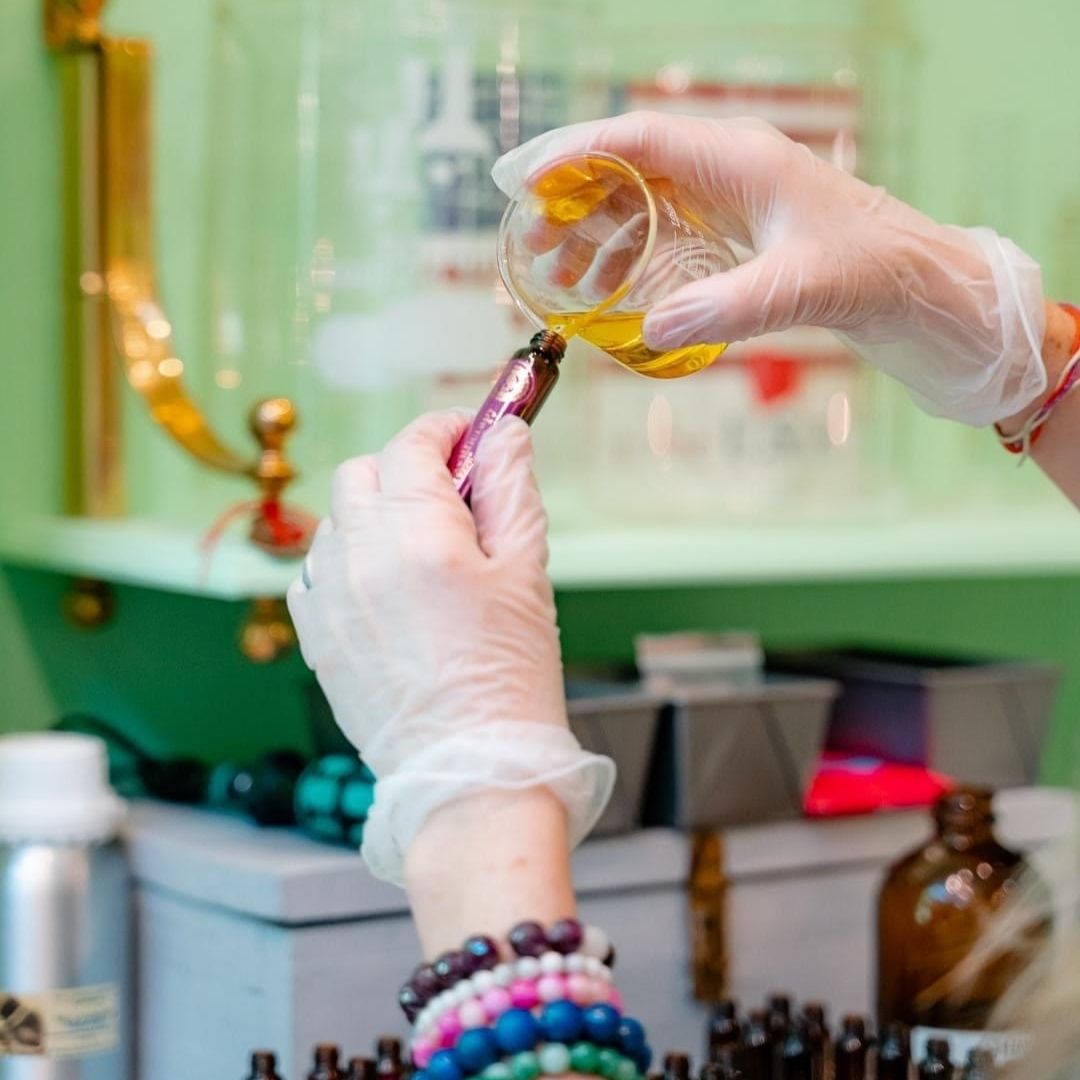
Oil-based carriers like almond, coconut, and jojoba offer a compelling alternative, usually in convenient roll-on formats. Each oil brings unique characteristics to the table. Jojoba closely mimics your skin's natural sebum, coconut offers rich moisturizing properties, and almond provides a light, silky texture. Choose oils with long shelf lives that won't trigger allergies or sensitivities. Natural perfumes also fare better in dark bottles that protect them from sunlight degradation, preserving both scent and potency.
Water-based perfume represents a newer, innovative category that's gaining popularity. The challenge? Water and oil naturally separate, requiring emulsifiers and preservatives to keep them blended. If you want a natural spray perfume that's breathable, lightweight, and functional, look for clean chemistry and transparent ingredients lists. Both water-based and oil-based perfumes maintain the therapeutic benefits of essential oils, creating a dual benefit where you smell good and feel good simultaneously.
Navigating Price Points: Understanding What You're Really Paying For
Let's be honest: natural perfumes aren't cheap, and there are legitimate reasons for their higher price tags. The ingredients cost significantly more than synthetic alternatives. Pure essential oils require vast amounts of plant material—imagine how many rose petals it takes to create just one ounce of rose essential oil. Sourcing these oils from around the world drives up production expenses considerably.
Various factors impact the final price tag: harvest conditions, crop yields, shipping and import costs, sustainable farming practices, and ethical labor standards. Beautiful packaging and artisanal production methods can add to the cost as well. When you buy natural perfume, you're often supporting small-batch production and sustainable practices rather than mass manufacturing.
Here's the key insight that savvy shoppers understand: price and quality don't always align perfectly in the perfume world. Much of a luxury perfume's cost goes toward marketing campaigns, celebrity endorsements, and designer branding rather than what's actually inside the bottle. This is where niche and indie brands truly shine, often delivering exceptional quality at better value than famous department store names. These smaller brands invest in ingredients and craftsmanship instead of advertising budgets.
Do your research, read reviews from real users, and don't assume the most expensive option is automatically the best. Sometimes a $60 artisan perfume outperforms a $200 designer fragrance in both quality and longevity.
Appreciating Natural Perfume Color: Why Murky Is a Good Thing
If you're drawn to the sparkling pinks and blues of synthetic fragrances, natural perfumes might initially seem visually underwhelming. Those vivid, jewel-toned colors come from synthetic dyes and additives that natural perfumers simply can't—and won't—replicate ethically. Those artificial colors serve no functional purpose except visual appeal, and they're often derived from petroleum or coal tar sources.
Authentic natural perfumes typically appear in more subdued, earthy shades ranging from light yellow and green to deeper amber, honey, and gold tones. Water-based versions can look cloudy or milky, like diluted chai or oat milk. These natural variations in color are actually signs of purity—they indicate you're getting real plant extracts rather than synthetic alternatives.
Here's an important warning sign to watch for: if your spray perfume appears darker at the bottom and lighter on top, requiring vigorous shaking before each use, the oils aren't properly emulsified with the carrier. This separation means inconsistent application—sometimes you'll get too much oil, sometimes too little. Each spray becomes unpredictable, potentially overwhelming or disappointing.
Don't worry about natural colors staining your skin or clothes—properly formulated natural perfumes won't cause discoloration. Instead, focus on what you're putting on your skin, your body's largest and most sensitive organ. Your skin thrives on hydration and nourishment, making water and oils ideal carriers that support skin health. Alcohol, while effective for scent projection, is inherently drying and can irritate sensitive skin over time. The choice is yours, but consider the long-term effects on your skin's wellness.
Mastering Sillage: The Art of Your Personal Scent Trail
Sillage—pronounced "see-YAZH," from the French word for "wake"—is the scent trail you leave behind as you move through space. It's the lingering essence that follows you through a room, the subtle signature others notice when you pass by, the invisible but memorable presence you create. For many perfume lovers, sillage is the most crucial aspect of any fragrance.
Natural ingredients contain remarkably complex, multifaceted scent profiles with dozens or even hundreds of aromatic compounds in each essential oil. This complexity is why skilled perfumers use them thoughtfully and sparingly. Formulas overloaded with too many competing notes create heavy, overwhelming sillage that announces your presence rather than enhancing it. You want people to lean in closer, not step back.
The beauty of essential oil perfume lies in how the tiny aromatic molecules absorb into your skin, interacting with your unique body chemistry. This creates something deeply personal and unrepeatable—a signature scent that's healing, balanced, and authentically yours. Your natural skin oils, pH balance, and body temperature all influence how the perfume develops and projects.
This is the ultimate luxury: a perfume that evolves with you throughout the day, revealing different facets as your body warms it. You become the star of your own scent story, not a walking advertisement for a celebrity endorsement or designer label. Natural perfume respects your individuality rather than overwhelming it.
Your Natural Perfume Journey: Final Shopping Tips
When exploring natural perfumes, pace yourself and give your senses time to adjust. Smelling too many fragrances in quick succession can overwhelm your olfactory receptors and stuff up your nose, a phenomenon perfumers call "nose fatigue" or "olfactory adaptation." Your sense of smell needs breaks to reset and accurately perceive new scents.
Start with online research to narrow down your options based on scent families you're drawn to—floral, woody, citrus, spicy, or herbaceous. Read detailed reviews from real customers. Then seek out locations where you can sample in person. Test scents on paper strips first to get an initial impression, then apply your favorites directly to your skin. Perfume develops differently on everyone, so skin testing is essential.
Give each fragrance time to evolve. Top notes appear immediately but fade within 15-30 minutes. Heart notes emerge next and last several hours. Base notes provide the foundation and can linger for 6-8 hours or more. A perfume that seems ordinary at first might become extraordinary as it develops on your skin.
Can't sample in person? Many brands offer discovery sets or sample kits—a smart, economical investment before committing to a full-size bottle. These sets let you live with a scent for several days, wearing it in different settings and seasons to see if it truly resonates with you.
Take your time with this journey. Trust your nose, honor your preferences, and remember: the perfect natural perfume is the one that makes you feel authentically, beautifully, confidently yourself. It should enhance your presence, not mask it. When you find that perfect scent, you'll know—it will feel like coming home.
Shopping for natural perfumes can feel overwhelming if you're making the switch from conventional fragrances. You used to spend hours exploring every perfume in department store aisles, confident in the brands and scents you loved. But natural perfume is different territory entirely. Where do you even start? What matters most—ingredients, formulations, certifications, sustainability?
If you're ready to navigate this new world and ask the right questions, we've got you covered. Here are the five essential factors to consider when searching for the best essential oil perfumes, whether you're shopping online or in stores.
Understanding Fragrance Composition: What's Really Inside the Bottle
Most natural perfume brands highlight their top notes—the initial burst of scent you experience when you first spray. But understanding what's actually in the bottle goes much deeper than surface appeal. The fragrance concentration typically ranges from 2 to 30 percent, depending on whether you're buying cologne, eau de parfum, or perfume extract. Each has a different intensity and longevity.
Before making a purchase, investigate the fragrance ingredients thoroughly. Does it contain natural isolates or synthetic ingredients that mimic nature? Here's an important truth: just because a perfume is marketed as "natural" doesn't automatically mean it's chemical-free or breathable. There's no universal right or wrong answer—it depends entirely on your priorities. Are you seeking clean, green, sustainable, chemical-free, or alcohol-free options? Each choice comes with different benefits.
Reading labels is crucial to making informed decisions. Online, check the ingredients section carefully—reputable brands list everything. In stores, flip the box over and examine the fine print. If you see the word "fragrance" without a detailed ingredient list, that's a red flag. Brands that hide their formulations often claim they're protecting trade secrets, but transparency is the hallmark of truly clean and natural companies. They have nothing to hide and everything to share.
Shopping at retailers like Ulta, Sephora, or Credo? They publish clean beauty guides that detail their standards and show exactly how rigorously they vet each brand's formulations. These guidelines can be invaluable resources when you're learning to navigate the natural perfume landscape.
Choosing Your Carrier Base: The Foundation of Every Fragrance
Every perfume needs a carrier—the base that holds and delivers the fragrance. This foundation matters more than most people realize, affecting everything from how the scent develops on your skin to whether you receive therapeutic benefits from the essential oils.
Traditional perfumers typically work with denatured or cosmetic-grade alcohol or cane alcohol. The advantage of alcohol-based perfumes is impressive evaporation, which allows the scent to project beautifully and linger on your skin throughout the day. However, there's a trade-off: once essential oils mix with alcohol, they lose their therapeutic properties. You'll smell amazing, but you won't get the functional aromatherapy benefits that pure essential oils offer.
Oil-based carriers like almond, coconut, and jojoba offer a compelling alternative, usually in convenient roll-on formats. Each oil brings unique characteristics to the table. Jojoba closely mimics your skin's natural sebum, coconut offers rich moisturizing properties, and almond provides a light, silky texture. Choose oils with long shelf lives that won't trigger allergies or sensitivities. Natural perfumes also fare better in dark bottles that protect them from sunlight degradation, preserving both scent and potency.
Water-based perfume represents a newer, innovative category that's gaining popularity. The challenge? Water and oil naturally separate, requiring emulsifiers and preservatives to keep them blended. If you want a natural spray perfume that's breathable, lightweight, and functional, look for clean chemistry and transparent ingredients lists. Both water-based and oil-based perfumes maintain the therapeutic benefits of essential oils, creating a dual benefit where you smell good and feel good simultaneously.
Navigating Price Points: Understanding What You're Really Paying For
Let's be honest: natural perfumes aren't cheap, and there are legitimate reasons for their higher price tags. The ingredients cost significantly more than synthetic alternatives. Pure essential oils require vast amounts of plant material—imagine how many rose petals it takes to create just one ounce of rose essential oil. Sourcing these oils from around the world drives up production expenses considerably.
Various factors impact the final price tag: harvest conditions, crop yields, shipping and import costs, sustainable farming practices, and ethical labor standards. Beautiful packaging and artisanal production methods can add to the cost as well. When you buy natural perfume, you're often supporting small-batch production and sustainable practices rather than mass manufacturing.
Here's the key insight that savvy shoppers understand: price and quality don't always align perfectly in the perfume world. Much of a luxury perfume's cost goes toward marketing campaigns, celebrity endorsements, and designer branding rather than what's actually inside the bottle. This is where niche and indie brands truly shine, often delivering exceptional quality at better value than famous department store names. These smaller brands invest in ingredients and craftsmanship instead of advertising budgets.
Do your research, read reviews from real users, and don't assume the most expensive option is automatically the best. Sometimes a $60 artisan perfume outperforms a $200 designer fragrance in both quality and longevity.
Appreciating Natural Perfume Color: Why Murky Is a Good Thing
If you're drawn to the sparkling pinks and blues of synthetic fragrances, natural perfumes might initially seem visually underwhelming. Those vivid, jewel-toned colors come from synthetic dyes and additives that natural perfumers simply can't—and won't—replicate ethically. Those artificial colors serve no functional purpose except visual appeal, and they're often derived from petroleum or coal tar sources.
Authentic natural perfumes typically appear in more subdued, earthy shades ranging from light yellow and green to deeper amber, honey, and gold tones. Water-based versions can look cloudy or milky, like diluted chai or oat milk. These natural variations in color are actually signs of purity—they indicate you're getting real plant extracts rather than synthetic alternatives.
Here's an important warning sign to watch for: if your spray perfume appears darker at the bottom and lighter on top, requiring vigorous shaking before each use, the oils aren't properly emulsified with the carrier. This separation means inconsistent application—sometimes you'll get too much oil, sometimes too little. Each spray becomes unpredictable, potentially overwhelming or disappointing.
Don't worry about natural colors staining your skin or clothes—properly formulated natural perfumes won't cause discoloration. Instead, focus on what you're putting on your skin, your body's largest and most sensitive organ. Your skin thrives on hydration and nourishment, making water and oils ideal carriers that support skin health. Alcohol, while effective for scent projection, is inherently drying and can irritate sensitive skin over time. The choice is yours, but consider the long-term effects on your skin's wellness.
Mastering Sillage: The Art of Your Personal Scent Trail
Sillage—pronounced "see-YAZH," from the French word for "wake"—is the scent trail you leave behind as you move through space. It's the lingering essence that follows you through a room, the subtle signature others notice when you pass by, the invisible but memorable presence you create. For many perfume lovers, sillage is the most crucial aspect of any fragrance.
Natural ingredients contain remarkably complex, multifaceted scent profiles with dozens or even hundreds of aromatic compounds in each essential oil. This complexity is why skilled perfumers use them thoughtfully and sparingly. Formulas overloaded with too many competing notes create heavy, overwhelming sillage that announces your presence rather than enhancing it. You want people to lean in closer, not step back.
The beauty of essential oil perfume lies in how the tiny aromatic molecules absorb into your skin, interacting with your unique body chemistry. This creates something deeply personal and unrepeatable—a signature scent that's healing, balanced, and authentically yours. Your natural skin oils, pH balance, and body temperature all influence how the perfume develops and projects.
This is the ultimate luxury: a perfume that evolves with you throughout the day, revealing different facets as your body warms it. You become the star of your own scent story, not a walking advertisement for a celebrity endorsement or designer label. Natural perfume respects your individuality rather than overwhelming it.
Your Natural Perfume Journey: Final Shopping Tips
When exploring natural perfumes, pace yourself and give your senses time to adjust. Smelling too many fragrances in quick succession can overwhelm your olfactory receptors and stuff up your nose, a phenomenon perfumers call "nose fatigue" or "olfactory adaptation." Your sense of smell needs breaks to reset and accurately perceive new scents.
Start with online research to narrow down your options based on scent families you're drawn to—floral, woody, citrus, spicy, or herbaceous. Read detailed reviews from real customers. Then seek out locations where you can sample in person. Test scents on paper strips first to get an initial impression, then apply your favorites directly to your skin. Perfume develops differently on everyone, so skin testing is essential.
Give each fragrance time to evolve. Top notes appear immediately but fade within 15-30 minutes. Heart notes emerge next and last several hours. Base notes provide the foundation and can linger for 6-8 hours or more. A perfume that seems ordinary at first might become extraordinary as it develops on your skin.
Can't sample in person? Many brands offer discovery sets or sample kits—a smart, economical investment before committing to a full-size bottle. These sets let you live with a scent for several days, wearing it in different settings and seasons to see if it truly resonates with you.
Take your time with this journey. Trust your nose, honor your preferences, and remember: the perfect natural perfume is the one that makes you feel authentically, beautifully, confidently yourself. It should enhance your presence, not mask it. When you find that perfect scent, you'll know—it will feel like coming home.
Shopping for natural perfumes can feel overwhelming if you're making the switch from conventional fragrances. You used to spend hours exploring every perfume in department store aisles, confident in the brands and scents you loved. But natural perfume is different territory entirely. Where do you even start? What matters most—ingredients, formulations, certifications, sustainability?
If you're ready to navigate this new world and ask the right questions, we've got you covered. Here are the five essential factors to consider when searching for the best essential oil perfumes, whether you're shopping online or in stores.
Understanding Fragrance Composition: What's Really Inside the Bottle
Most natural perfume brands highlight their top notes—the initial burst of scent you experience when you first spray. But understanding what's actually in the bottle goes much deeper than surface appeal. The fragrance concentration typically ranges from 2 to 30 percent, depending on whether you're buying cologne, eau de parfum, or perfume extract. Each has a different intensity and longevity.
Before making a purchase, investigate the fragrance ingredients thoroughly. Does it contain natural isolates or synthetic ingredients that mimic nature? Here's an important truth: just because a perfume is marketed as "natural" doesn't automatically mean it's chemical-free or breathable. There's no universal right or wrong answer—it depends entirely on your priorities. Are you seeking clean, green, sustainable, chemical-free, or alcohol-free options? Each choice comes with different benefits.
Reading labels is crucial to making informed decisions. Online, check the ingredients section carefully—reputable brands list everything. In stores, flip the box over and examine the fine print. If you see the word "fragrance" without a detailed ingredient list, that's a red flag. Brands that hide their formulations often claim they're protecting trade secrets, but transparency is the hallmark of truly clean and natural companies. They have nothing to hide and everything to share.
Shopping at retailers like Ulta, Sephora, or Credo? They publish clean beauty guides that detail their standards and show exactly how rigorously they vet each brand's formulations. These guidelines can be invaluable resources when you're learning to navigate the natural perfume landscape.
Choosing Your Carrier Base: The Foundation of Every Fragrance
Every perfume needs a carrier—the base that holds and delivers the fragrance. This foundation matters more than most people realize, affecting everything from how the scent develops on your skin to whether you receive therapeutic benefits from the essential oils.
Traditional perfumers typically work with denatured or cosmetic-grade alcohol or cane alcohol. The advantage of alcohol-based perfumes is impressive evaporation, which allows the scent to project beautifully and linger on your skin throughout the day. However, there's a trade-off: once essential oils mix with alcohol, they lose their therapeutic properties. You'll smell amazing, but you won't get the functional aromatherapy benefits that pure essential oils offer.
Oil-based carriers like almond, coconut, and jojoba offer a compelling alternative, usually in convenient roll-on formats. Each oil brings unique characteristics to the table. Jojoba closely mimics your skin's natural sebum, coconut offers rich moisturizing properties, and almond provides a light, silky texture. Choose oils with long shelf lives that won't trigger allergies or sensitivities. Natural perfumes also fare better in dark bottles that protect them from sunlight degradation, preserving both scent and potency.
Water-based perfume represents a newer, innovative category that's gaining popularity. The challenge? Water and oil naturally separate, requiring emulsifiers and preservatives to keep them blended. If you want a natural spray perfume that's breathable, lightweight, and functional, look for clean chemistry and transparent ingredients lists. Both water-based and oil-based perfumes maintain the therapeutic benefits of essential oils, creating a dual benefit where you smell good and feel good simultaneously.
Navigating Price Points: Understanding What You're Really Paying For
Let's be honest: natural perfumes aren't cheap, and there are legitimate reasons for their higher price tags. The ingredients cost significantly more than synthetic alternatives. Pure essential oils require vast amounts of plant material—imagine how many rose petals it takes to create just one ounce of rose essential oil. Sourcing these oils from around the world drives up production expenses considerably.
Various factors impact the final price tag: harvest conditions, crop yields, shipping and import costs, sustainable farming practices, and ethical labor standards. Beautiful packaging and artisanal production methods can add to the cost as well. When you buy natural perfume, you're often supporting small-batch production and sustainable practices rather than mass manufacturing.
Here's the key insight that savvy shoppers understand: price and quality don't always align perfectly in the perfume world. Much of a luxury perfume's cost goes toward marketing campaigns, celebrity endorsements, and designer branding rather than what's actually inside the bottle. This is where niche and indie brands truly shine, often delivering exceptional quality at better value than famous department store names. These smaller brands invest in ingredients and craftsmanship instead of advertising budgets.
Do your research, read reviews from real users, and don't assume the most expensive option is automatically the best. Sometimes a $60 artisan perfume outperforms a $200 designer fragrance in both quality and longevity.
Appreciating Natural Perfume Color: Why Murky Is a Good Thing
If you're drawn to the sparkling pinks and blues of synthetic fragrances, natural perfumes might initially seem visually underwhelming. Those vivid, jewel-toned colors come from synthetic dyes and additives that natural perfumers simply can't—and won't—replicate ethically. Those artificial colors serve no functional purpose except visual appeal, and they're often derived from petroleum or coal tar sources.
Authentic natural perfumes typically appear in more subdued, earthy shades ranging from light yellow and green to deeper amber, honey, and gold tones. Water-based versions can look cloudy or milky, like diluted chai or oat milk. These natural variations in color are actually signs of purity—they indicate you're getting real plant extracts rather than synthetic alternatives.
Here's an important warning sign to watch for: if your spray perfume appears darker at the bottom and lighter on top, requiring vigorous shaking before each use, the oils aren't properly emulsified with the carrier. This separation means inconsistent application—sometimes you'll get too much oil, sometimes too little. Each spray becomes unpredictable, potentially overwhelming or disappointing.
Don't worry about natural colors staining your skin or clothes—properly formulated natural perfumes won't cause discoloration. Instead, focus on what you're putting on your skin, your body's largest and most sensitive organ. Your skin thrives on hydration and nourishment, making water and oils ideal carriers that support skin health. Alcohol, while effective for scent projection, is inherently drying and can irritate sensitive skin over time. The choice is yours, but consider the long-term effects on your skin's wellness.
Mastering Sillage: The Art of Your Personal Scent Trail
Sillage—pronounced "see-YAZH," from the French word for "wake"—is the scent trail you leave behind as you move through space. It's the lingering essence that follows you through a room, the subtle signature others notice when you pass by, the invisible but memorable presence you create. For many perfume lovers, sillage is the most crucial aspect of any fragrance.
Natural ingredients contain remarkably complex, multifaceted scent profiles with dozens or even hundreds of aromatic compounds in each essential oil. This complexity is why skilled perfumers use them thoughtfully and sparingly. Formulas overloaded with too many competing notes create heavy, overwhelming sillage that announces your presence rather than enhancing it. You want people to lean in closer, not step back.
The beauty of essential oil perfume lies in how the tiny aromatic molecules absorb into your skin, interacting with your unique body chemistry. This creates something deeply personal and unrepeatable—a signature scent that's healing, balanced, and authentically yours. Your natural skin oils, pH balance, and body temperature all influence how the perfume develops and projects.
This is the ultimate luxury: a perfume that evolves with you throughout the day, revealing different facets as your body warms it. You become the star of your own scent story, not a walking advertisement for a celebrity endorsement or designer label. Natural perfume respects your individuality rather than overwhelming it.
Your Natural Perfume Journey: Final Shopping Tips
When exploring natural perfumes, pace yourself and give your senses time to adjust. Smelling too many fragrances in quick succession can overwhelm your olfactory receptors and stuff up your nose, a phenomenon perfumers call "nose fatigue" or "olfactory adaptation." Your sense of smell needs breaks to reset and accurately perceive new scents.
Start with online research to narrow down your options based on scent families you're drawn to—floral, woody, citrus, spicy, or herbaceous. Read detailed reviews from real customers. Then seek out locations where you can sample in person. Test scents on paper strips first to get an initial impression, then apply your favorites directly to your skin. Perfume develops differently on everyone, so skin testing is essential.
Give each fragrance time to evolve. Top notes appear immediately but fade within 15-30 minutes. Heart notes emerge next and last several hours. Base notes provide the foundation and can linger for 6-8 hours or more. A perfume that seems ordinary at first might become extraordinary as it develops on your skin.
Can't sample in person? Many brands offer discovery sets or sample kits—a smart, economical investment before committing to a full-size bottle. These sets let you live with a scent for several days, wearing it in different settings and seasons to see if it truly resonates with you.
Take your time with this journey. Trust your nose, honor your preferences, and remember: the perfect natural perfume is the one that makes you feel authentically, beautifully, confidently yourself. It should enhance your presence, not mask it. When you find that perfect scent, you'll know—it will feel like coming home.
Shopping for natural perfumes can feel overwhelming if you're making the switch from conventional fragrances. You used to spend hours exploring every perfume in department store aisles, confident in the brands and scents you loved. But natural perfume is different territory entirely. Where do you even start? What matters most—ingredients, formulations, certifications, sustainability?
If you're ready to navigate this new world and ask the right questions, we've got you covered. Here are the five essential factors to consider when searching for the best essential oil perfumes, whether you're shopping online or in stores.
Understanding Fragrance Composition: What's Really Inside the Bottle
Most natural perfume brands highlight their top notes—the initial burst of scent you experience when you first spray. But understanding what's actually in the bottle goes much deeper than surface appeal. The fragrance concentration typically ranges from 2 to 30 percent, depending on whether you're buying cologne, eau de parfum, or perfume extract. Each has a different intensity and longevity.
Before making a purchase, investigate the fragrance ingredients thoroughly. Does it contain natural isolates or synthetic ingredients that mimic nature? Here's an important truth: just because a perfume is marketed as "natural" doesn't automatically mean it's chemical-free or breathable. There's no universal right or wrong answer—it depends entirely on your priorities. Are you seeking clean, green, sustainable, chemical-free, or alcohol-free options? Each choice comes with different benefits.
Reading labels is crucial to making informed decisions. Online, check the ingredients section carefully—reputable brands list everything. In stores, flip the box over and examine the fine print. If you see the word "fragrance" without a detailed ingredient list, that's a red flag. Brands that hide their formulations often claim they're protecting trade secrets, but transparency is the hallmark of truly clean and natural companies. They have nothing to hide and everything to share.
Shopping at retailers like Ulta, Sephora, or Credo? They publish clean beauty guides that detail their standards and show exactly how rigorously they vet each brand's formulations. These guidelines can be invaluable resources when you're learning to navigate the natural perfume landscape.
Choosing Your Carrier Base: The Foundation of Every Fragrance
Every perfume needs a carrier—the base that holds and delivers the fragrance. This foundation matters more than most people realize, affecting everything from how the scent develops on your skin to whether you receive therapeutic benefits from the essential oils.
Traditional perfumers typically work with denatured or cosmetic-grade alcohol or cane alcohol. The advantage of alcohol-based perfumes is impressive evaporation, which allows the scent to project beautifully and linger on your skin throughout the day. However, there's a trade-off: once essential oils mix with alcohol, they lose their therapeutic properties. You'll smell amazing, but you won't get the functional aromatherapy benefits that pure essential oils offer.
Oil-based carriers like almond, coconut, and jojoba offer a compelling alternative, usually in convenient roll-on formats. Each oil brings unique characteristics to the table. Jojoba closely mimics your skin's natural sebum, coconut offers rich moisturizing properties, and almond provides a light, silky texture. Choose oils with long shelf lives that won't trigger allergies or sensitivities. Natural perfumes also fare better in dark bottles that protect them from sunlight degradation, preserving both scent and potency.
Water-based perfume represents a newer, innovative category that's gaining popularity. The challenge? Water and oil naturally separate, requiring emulsifiers and preservatives to keep them blended. If you want a natural spray perfume that's breathable, lightweight, and functional, look for clean chemistry and transparent ingredients lists. Both water-based and oil-based perfumes maintain the therapeutic benefits of essential oils, creating a dual benefit where you smell good and feel good simultaneously.
Navigating Price Points: Understanding What You're Really Paying For
Let's be honest: natural perfumes aren't cheap, and there are legitimate reasons for their higher price tags. The ingredients cost significantly more than synthetic alternatives. Pure essential oils require vast amounts of plant material—imagine how many rose petals it takes to create just one ounce of rose essential oil. Sourcing these oils from around the world drives up production expenses considerably.
Various factors impact the final price tag: harvest conditions, crop yields, shipping and import costs, sustainable farming practices, and ethical labor standards. Beautiful packaging and artisanal production methods can add to the cost as well. When you buy natural perfume, you're often supporting small-batch production and sustainable practices rather than mass manufacturing.
Here's the key insight that savvy shoppers understand: price and quality don't always align perfectly in the perfume world. Much of a luxury perfume's cost goes toward marketing campaigns, celebrity endorsements, and designer branding rather than what's actually inside the bottle. This is where niche and indie brands truly shine, often delivering exceptional quality at better value than famous department store names. These smaller brands invest in ingredients and craftsmanship instead of advertising budgets.
Do your research, read reviews from real users, and don't assume the most expensive option is automatically the best. Sometimes a $60 artisan perfume outperforms a $200 designer fragrance in both quality and longevity.
Appreciating Natural Perfume Color: Why Murky Is a Good Thing
If you're drawn to the sparkling pinks and blues of synthetic fragrances, natural perfumes might initially seem visually underwhelming. Those vivid, jewel-toned colors come from synthetic dyes and additives that natural perfumers simply can't—and won't—replicate ethically. Those artificial colors serve no functional purpose except visual appeal, and they're often derived from petroleum or coal tar sources.
Authentic natural perfumes typically appear in more subdued, earthy shades ranging from light yellow and green to deeper amber, honey, and gold tones. Water-based versions can look cloudy or milky, like diluted chai or oat milk. These natural variations in color are actually signs of purity—they indicate you're getting real plant extracts rather than synthetic alternatives.
Here's an important warning sign to watch for: if your spray perfume appears darker at the bottom and lighter on top, requiring vigorous shaking before each use, the oils aren't properly emulsified with the carrier. This separation means inconsistent application—sometimes you'll get too much oil, sometimes too little. Each spray becomes unpredictable, potentially overwhelming or disappointing.
Don't worry about natural colors staining your skin or clothes—properly formulated natural perfumes won't cause discoloration. Instead, focus on what you're putting on your skin, your body's largest and most sensitive organ. Your skin thrives on hydration and nourishment, making water and oils ideal carriers that support skin health. Alcohol, while effective for scent projection, is inherently drying and can irritate sensitive skin over time. The choice is yours, but consider the long-term effects on your skin's wellness.
Mastering Sillage: The Art of Your Personal Scent Trail
Sillage—pronounced "see-YAZH," from the French word for "wake"—is the scent trail you leave behind as you move through space. It's the lingering essence that follows you through a room, the subtle signature others notice when you pass by, the invisible but memorable presence you create. For many perfume lovers, sillage is the most crucial aspect of any fragrance.
Natural ingredients contain remarkably complex, multifaceted scent profiles with dozens or even hundreds of aromatic compounds in each essential oil. This complexity is why skilled perfumers use them thoughtfully and sparingly. Formulas overloaded with too many competing notes create heavy, overwhelming sillage that announces your presence rather than enhancing it. You want people to lean in closer, not step back.
The beauty of essential oil perfume lies in how the tiny aromatic molecules absorb into your skin, interacting with your unique body chemistry. This creates something deeply personal and unrepeatable—a signature scent that's healing, balanced, and authentically yours. Your natural skin oils, pH balance, and body temperature all influence how the perfume develops and projects.
This is the ultimate luxury: a perfume that evolves with you throughout the day, revealing different facets as your body warms it. You become the star of your own scent story, not a walking advertisement for a celebrity endorsement or designer label. Natural perfume respects your individuality rather than overwhelming it.
Your Natural Perfume Journey: Final Shopping Tips
When exploring natural perfumes, pace yourself and give your senses time to adjust. Smelling too many fragrances in quick succession can overwhelm your olfactory receptors and stuff up your nose, a phenomenon perfumers call "nose fatigue" or "olfactory adaptation." Your sense of smell needs breaks to reset and accurately perceive new scents.
Start with online research to narrow down your options based on scent families you're drawn to—floral, woody, citrus, spicy, or herbaceous. Read detailed reviews from real customers. Then seek out locations where you can sample in person. Test scents on paper strips first to get an initial impression, then apply your favorites directly to your skin. Perfume develops differently on everyone, so skin testing is essential.
Give each fragrance time to evolve. Top notes appear immediately but fade within 15-30 minutes. Heart notes emerge next and last several hours. Base notes provide the foundation and can linger for 6-8 hours or more. A perfume that seems ordinary at first might become extraordinary as it develops on your skin.
Can't sample in person? Many brands offer discovery sets or sample kits—a smart, economical investment before committing to a full-size bottle. These sets let you live with a scent for several days, wearing it in different settings and seasons to see if it truly resonates with you.
Take your time with this journey. Trust your nose, honor your preferences, and remember: the perfect natural perfume is the one that makes you feel authentically, beautifully, confidently yourself. It should enhance your presence, not mask it. When you find that perfect scent, you'll know—it will feel like coming home.
Continue reading
3 Things to Look for When Searching for a Sustainable Natural Organic Perfume Brand
Finding The Silver Lining: A Natural Journey Through Menopause